
Figuring out how to find legal assistant remote jobs can feel confusing at first—but it doesn’t have to be.
Whether you’ve got legal studies under your belt or just a passion for organization and detail, there are remote law firms out there looking for someone just like you.
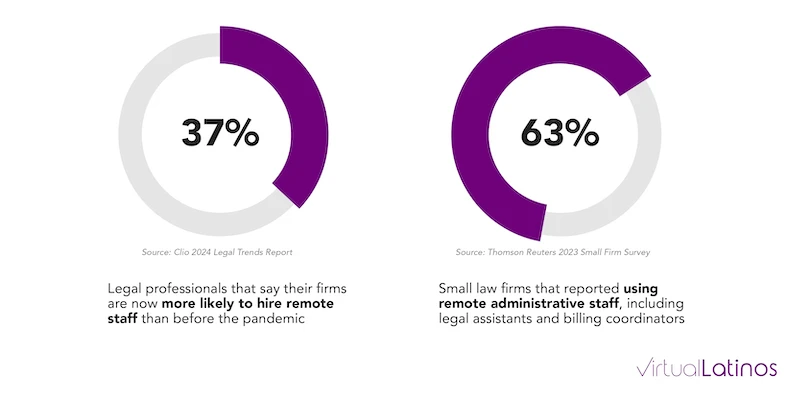
According to a 2024 Legal Trends Report by Clio, 37% of legal professionals say their firms are now more likely to hire remote staff than before the pandemic.
In a 2023 survey by Thomson Reuters, 63% of small law firms reported using remote administrative staff, including legal assistants and billing coordinators.
In this guide, we’ll show you how to find legal assistant remote jobs, break down what legal clients are really looking for, and share actionable tips to launch your legal career with confidence.
Key Takeaways
- Digital Shift: Over 65% of law firms now use cloud-based tools, making remote legal support a standard industry practice.
- Economic Advantage: Firms can reduce labor costs by 50–70% by hiring remote talent from regions such as Latin America.
- High Demand: 32% of law firms are actively seeking remote or outsourced staff to fill administrative gaps.
- Essential Skills: Success requires proficiency in legal software (Clio, MyCase), English fluency, and strict attention to confidentiality.
- Job Search Strategy: Focus on verified platforms like Virtual Latinos and LinkedIn rather than generic job boards.
Why Remote Legal Jobs Are Booming
Before you dive into how to land remote legal roles, it’s crucial to understand why legal remote jobs are growing rapidly and why this trend is here to stay.
1. Digital transformation in the legal sector
The legal industry, traditionally conservative in its adoption of technology, has undergone a significant digital transformation in the last five years.
With tools like cloud-based case management systems (e.g., Clio, MyCase), e-discovery platforms (e.g., Logikcull), and virtual deposition services, law firms can now handle document reviews, client communications, and filings entirely online.
According to the American Bar Association’s 2023 Legal Technology Survey Report, over 65% of law firms now use cloud services daily, with small and mid-sized firms leading the charge.
This shift has enabled legal teams to operate efficiently across geographies, making remote legal jobs not only viable but often preferable for operational agility.
2. Cost efficiency and global legal talent
In an era of economic pressure and rising operational costs, law firms are seeking ways to reduce overhead without sacrificing quality.
One solution? Hiring virtual legal assistants, paralegals, and researchers from Latin America and other nearshore regions.
This model offers a dual benefit:
- Firms save 50–70% on labor costs compared with hiring U.S.-based staff.
- Professionals from countries such as Colombia, Mexico, and Argentina bring bilingual proficiency, U.S.-style legal education, and time-zone compatibility.
This aligns with a broader trend toward legal process outsourcing (LPO), a sector projected to grow at a 24.9% CAGR from 2023 to 2030.
3. The growing administrative talent gap
Many small to midsize law firms in the U.S. face chronic understaffing, especially in administrative and paralegal roles. As caseloads increase post-pandemic, the demand for remote legal support is rising.
These firms often lack the infrastructure or resources to hire full-time, in-office staff. Remote legal professionals provide a scalable, flexible, and committed solution, ensuring continuity and responsiveness without requiring long-term contracts or office space.
Clio’s 2024 Legal Trends Report confirms this: 32% of law firms report actively seeking remote or outsourced legal staff.
This is not a temporary trend, but a reflection of a structural shift in how legal services are delivered.
| Metric | Data / Statistic |
| Cloud Adoption | 65% of law firms use cloud services daily |
| Cost Savings | 50–70% reduction in labor costs via remote hiring |
| Market Growth | 24.9% CAGR for Legal Process Outsourcing (2023–2030) |
| Hiring Intent | 32% of firms are seeking remote/outsourced staff |
4. Remote work is a competitive advantage
Remote legal jobs also attract top talent seeking flexibility, work-life balance, and international experience.
For legal professionals in emerging markets, this means access to higher-income opportunities and exposure to U.S. legal practices.
For firms, it means access to a global talent pool, reducing dependence on a local hiring market that is often saturated or overpriced.
What Does a Remote Legal Assistant Do?
Remote legal assistants perform critical, detail-oriented work that directly supports lawyers and their clients.
Here’s what you might be responsible for:
- Managing client intake and scheduling
- Preparing legal correspondence and memos
- Filing documents with courts electronically
- Managing legal databases and case files
- Conducting preliminary legal research
- Communicating with clients or opposing counsel
- Supporting lawyers during litigation prep
In essence, you become an essential partner to legal professionals, providing strategic support that enables them to focus on what they do best, all while working remotely.
How to Find Remote Legal Assistant Jobs (Without Losing Your Mind)
Now, let’s address the most important question: how to find legitimate, flexible remote legal assistant jobs that offer fair compensation.
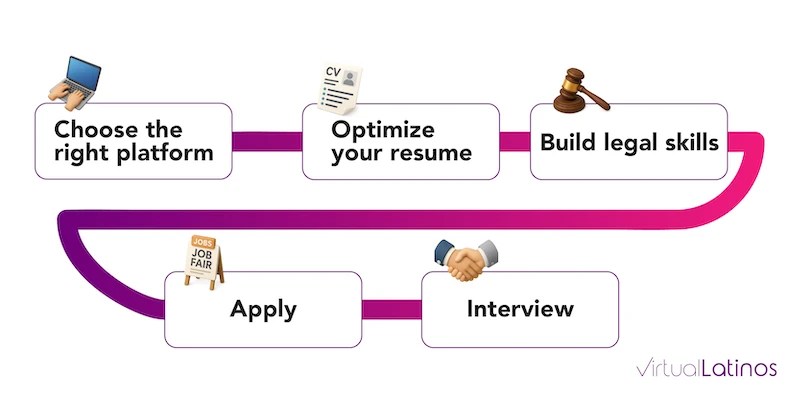
1. Know where to look: focus on verified platforms
Many job seekers spend valuable time navigating generic job boards that don’t specialize in remote legal work, making it harder to find quality opportunities that match their skills.
To find quality remote paralegal or legal assistant roles, target platforms that specialize in remote and legal talent:
- Virtual Latinos: A trusted platform that connects Latin American virtual assistants with pre-screened U.S. legal employers. Many jobs are long-term and offer direct exposure to law firm operations.
- LinkedIn Jobs: Search using terms like “remote legal assistant” or “virtual paralegal” and set up job alerts. Engaging directly with hiring managers through networking can also lead to hidden opportunities.
- Upwork: This platform is ideal for building a freelance portfolio, especially for newcomers to the legal VA space. While many jobs are short-term, some can lead to recurring client relationships.
- Indeed (U.S.): Combine keywords such as “remote” with “paralegal” or “legal assistant” to surface a wide variety of listings. Use filters like “remote,” “contract,” or “freelance” to refine your results.
Focus your energy on platforms with verified clients and clear job descriptions. Always research potential employers thoroughly, and remember that legitimate opportunities won’t require upfront payment for access.
2. Tailor your resume and portfolio for legal clients
Legal employers are not looking for generic virtual assistants. They want professionals who understand the legal environment.
Your application should reflect both administrative competency and legal familiarity.
Key resume elements to include:
- Legal experience: Showcase any prior work involving legal documentation, research, court filings, or client communication.
- Certifications: Mention any paralegal training, legal studies degrees, or continuing education relevant to the legal sector.
- Terminology: Use legal language that matches job descriptions. This demonstrates your familiarity with the field and improves keyword matching in applicant tracking systems.
- Software proficiency: List tools like Clio, MyCase, LexisNexis, PracticePanther, and others relevant to virtual legal work. Also include general tools such as Google Workspace, Microsoft Office, and Zoom.
- Video introduction (optional but impactful): A short video (1–2 minutes) describing your background, interest in legal work, and availability can humanize your application and build trust quickly with law firm employers.
3. Emphasize the soft skills legal clients value
Working in legal environments requires not just technical skills, but also high levels of professionalism, discretion, and reliability. Your ability to demonstrate these soft skills can make or break your application.
Important soft skills to highlight:
- Time management: Legal deadlines are strict. Demonstrate your ability to manage multiple tasks and meet deadlines consistently.
- Confidentiality and discretion: Law firms handle sensitive data. If you’ve worked under NDAs or handled client-sensitive information, make that clear.
- Organization and follow-through: Highlight your ability to manage calendars, organize case files, and follow up on important deadlines or requests.
- Critical thinking: Legal work often involves judgment and logic. Showcase situations where you had to problem-solve or make informed decisions.
- Attention to detail: Employers expect error-free communication. Your emails, proposals, and application materials should be spotless, every time.
Here’s what sets successful candidates apart: They treat every proposal and outreach message like a legal brief, clear, structured, and error-free. This immediately demonstrates your understanding of the precision and professionalism required in legal work.

What Do U.S. Clients Look For in a Remote Legal Assistant?
Let’s get specific. Based on data from clients using platforms like Virtual Latinos, here’s what legal employers want:
- Excellent written English
- Responsiveness and clear communication
- Availability in U.S. business hours
- Knowledge of legal procedures (especially U.S. civil or immigration law)
- Proactivity and trustworthiness
Here’s a quote from Ana Ochoa, a Mexican VA working with a U.S. immigration lawyer:
“At first, I thought I wasn’t qualified. But once I got training on their processes, I became their go-to person for managing affidavits and client intake. Now I’m part of their weekly legal strategy meetings.”
FAQs: Your Top Questions Answered
What qualifications do I need to become a remote legal assistant?
You don’t always need a law degree, but experience with legal documents, research, and client communication helps. A paralegal certificate or VA experience is a big plus.
Is English fluency necessary?
Yes. Most U.S. clients require strong written and spoken English. Tools like Grammarly, DeepL, or even enrolling in legal English classes can help you upskill quickly.
Can I work as a remote paralegal without a U.S. certification?
Yes, especially if you’re supporting administrative tasks. However, some tasks (like giving legal advice) are restricted unless you’re licensed in that state or country.
Where can I find online legal assistant training?
- Udemy: Paralegal and legal admin courses
- Coursera: Legal system basics
- Virtual Latinos Academy: Courses made for Latin American VAs
Are these jobs really stable?
If you prove your value, many clients keep VAs for years. Legal clients often require long-term support, particularly in family law, immigration, and personal injury.
Start Your Remote Legal Assistant Career Today
The opportunities you’ve been preparing for are already here. With the rise of remote legal roles, there’s never been a better time to turn your skills into a meaningful, well-paid career supporting U.S. law firms, all from the comfort of your home.
The Virtual Latinos community is filled with professionals like you who’ve taken the leap and are now thriving in legal assistant roles across the U.S. They’re not just finding jobs; they’re building careers, growing their confidence, and mentoring others along the way.
And if you’re just getting started or looking to sharpen your skills, VL Academy offers training designed specifically for Latin American VAs entering the legal field.
Still wondering how to find legal assistant remote jobs that match your strengths and goals? Apply now to join our growing community and launch your legal career the smart way, remote, flexible, and future-ready.