
If you’re fluent in both English and Spanish, you already possess a powerful competitive advantage in today’s remote work landscape. Now it’s time to transform that skill into a meaningful, sustainable remote career. Becoming a bilingual virtual assistant is a smart choice for 2026. It is also a popular way to start a successful remote career.
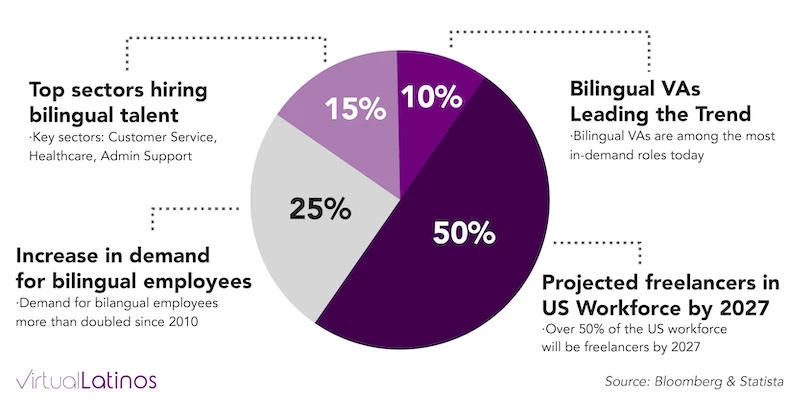
In fact, demand for bilingual employees in the U.S. more than doubled between 2010 and 2021, driven by surges in industries such as customer service, healthcare, and administrative support.
Employers are actively seeking professionals who can communicate seamlessly in both English and Spanish, and virtual assistants are at the top of that list.
At the same time, the freelance economy is booming. By 2027, over half of the U.S. workforce is expected to be freelancers. That means more opportunities than ever for bilingual professionals to work with clients remotely, on their own terms.
Key Takeaways
- High Demand: The need for bilingual (English/Spanish) remote professionals has doubled, creating massive opportunities for Latino workers.
- Diverse Roles: Beyond general admin, bilingual VAs are specialized in legal, healthcare, real estate, and digital marketing sectors.
- Core Requirements: Success requires English fluency, a stable internet connection, and specific hardware (headset/reliable computer).
- Career Growth: Working as a VA offers long-term stability, income potential, and the flexibility of a “digital nomad” lifestyle.
If you’re ready to build financial stability, grow professionally, and work with clients who truly value your expertise, Let’s discover ways to start. It will show you how to become a bilingual virtual assistant and get your first job.
Why Remote Work Is Growing in Latin America
Remote work is growing fast in Latin America. Many companies are hiring skilled Latino professionals, especially as virtual assistants. Because you speak two languages, you help businesses break language barriers and open new markets, making you an indispensable partner in their growth.
The reason is clear: Latin America is home to highly skilled, bilingual professionals who bring not only technical expertise but also cultural adaptability and a strong work ethic that U.S. businesses increasingly value.
Whether your background is in legal support, healthcare administration, real estate coordination, marketing, sales, or accounting, there’s a remote role designed for your specific expertise, and companies actively seeking professionals exactly like you.
Remote Jobs You Can Do as a Latino Virtual Professional
What remote job options are out there?
Today, working online isn’t limited to freelancing. There are several different paths you can take depending on your skills, goals, and lifestyle. Here are the three most common types of remote jobs you’ll find:
- Freelancer
- Pay-per-lead specialist
- Virtual assistant
Freelancer
Freelancers are self-employed professionals who manage their own time, taxes, and contracts. You might take on short-term projects or build relationships with repeat clients.
Freelancing offers maximum flexibility and the freedom to explore different industries, ideal if you have specialized skills in areas like writing, design, digital marketing, or consulting and want to build a diverse portfolio of clients.
Pay-per-lead
In this model, you get paid based on performance. Your job is to generate leads, potential clients or customers, for a business.
You might run ads, do outreach, or gather contact lists. You only earn money when those leads turn into actual sign-ups or sales. This model rewards performance and can be highly lucrative for results-driven professionals with proven experience in marketing or sales, though it requires consistent effort and strategic thinking to succeed.
Virtual Assistant (VA)
This is one of the fastest-growing job categories in the remote world. Virtual assistant roles offer stable, often long-term, positions that support businesses with administrative or specialized tasks. As a VA, your responsibilities can include:
- Scheduling meetings
- Managing inboxes
- Organizing files
- Coordinating travel
- Supporting social media
- Project portfolio management (PPM)
- Offering bilingual customer service
What makes VA roles particularly attractive is their versatility, you’ll find opportunities across virtually every industry, from tech and healthcare to e-commerce and real estate. You can focus on specific jobs based on your background. These include roles like Executive Assistant, Marketing VA, or Project Coordinator.

What Types Of Tasks Can A Bilingual Virtual Assistant Perform?
So, what exactly does a bilingual virtual assistant (VA) do? The short answer: a little bit of everything, depending on the industry and the client’s needs. Whether you’re working full-time or part-time, the tasks you’ll handle as a VA can vary day by day, which keeps things fresh and exciting.
If you’re aiming to support small businesses, startups, or even large companies, your job is to make their lives easier. You will either help with regular tasks or support special projects. In both cases, you will make a real impact.
Common bilingual VA roles and their primary responsibilities include:
| Industry/Role | Key Tasks |
| General Admin / Marketing | Inbox management, calendar scheduling, lead follow-ups, and booking appointments. |
| Legal | Drafting documents, legal research, and managing digital case files. |
| Healthcare | Patient reminders, billing/insurance claims, and coordinating referrals. |
| Real Estate | Lead generation, coordinating open houses, and preparing lease agreements. |
| Digital Marketing | Social media scheduling, email campaigns, blog writing, and video editing. |
Requirements to Become a Bilingual Virtual Assistant
To become a bilingual virtual assistant, you need three essentials: fluent English, reliable tech (computer, headset, and high-speed internet), and availability that aligns with your client’s time zone.
First, you need to be fluent in English. Second, identify clients who need bilingual virtual assistant services. Third, you need to position yourself as a bilingual virtual assistant.
When you are hired through an agency like Virtual Latinos, your chances of success improve because of the experience we have and the stability we provide not only to our clients but also to our community of virtual professionals. We also help you connect with potential clients.
Take a look at some of the requirements to become a virtual professional with Virtual Latinos:
Fluent language skills
As a bilingual virtual assistant, you can help companies expand to new countries or languages. You will be able to help businesses with writing and translation. As a native Spanish or Portuguese speaker, strong English proficiency is essential to communicate effectively with U.S.-based clients and deliver exceptional service.
Experience
Whether you’re an experienced professional looking to transition your expertise to remote work or someone with a few years of solid experience ready to take the next step, we welcome talent at various stages of professional development. While many of our virtual assistants hold 4-year college degrees, we value diverse educational backgrounds and real-world experience. What matters most is your professional skills, work ethic, and commitment to excellence.
Time availability
While you do get to build your own hours, you should be aware that you will need to be available for certain windows of the day. The company you work for and its location will determine the hours you need to be available.
Technical Requirements
- Computer: A high-performance machine capable of multitasking quickly.
- Audio: Professional headset and microphone for clear client calls.
- Connectivity: Reliable, high-speed internet connection to ensure constant availability during working hours.
Benefits of Becoming a Bilingual Virtual Assistant?
Here’s what makes a career as a bilingual virtual assistant so compelling, and why now is the perfect time to make your move:
- Long-term stability: At Virtual Latinos, we connect you with clients seeking lasting partnerships, not just short-term gigs. This means you can build meaningful professional relationships and enjoy the financial security that comes with consistent, ongoing work.
- Work-life balance: Remote work gives you the flexibility to design your schedule around your life, whether that means spending more time with family, pursuing personal goals, or simply eliminating exhausting commutes.
- Freedom and flexibility: As a virtual assistant, you are able to work where you want without worrying about logistics or long hours. You gain the freedom to work from anywhere with a reliable internet connection, whether that’s from home, a co-working space, or even while traveling.
- Career path for self-motivated individuals: If you are capable of multitasking and enjoy working independently, becoming a virtual assistant is the best career choice for you!
- Professional autonomy: You’ll have the freedom to apply your unique problem-solving approach and creative thinking to client projects, bringing your own expertise and perspective to every challenge.
- Visible impact and recognition: Your contributions are measurable and documented, from completed projects and client testimonials to tangible business results. Your expertise doesn’t go unnoticed in the remote world.
- Ownership of your professional direction: Unlike traditional roles, being a virtual assistant allows you to decide where your skills are best applied. You can select clients and industries that align with your expertise and working style, giving you greater ownership over your time, energy, and professional growth.
- Competitive USD compensation: You’ll earn fair pay in U.S. dollars that reflects your skills and expertise, providing the financial stability and purchasing power that local currency positions often can’t match.
- Unlimited growth opportunities: The digital landscape offers boundless opportunities for professional growth. As you develop new skills and deepen your expertise, Virtual Latinos provides pathways to more specialized, higher-level roles, creating clear opportunities for career advancement and increased earning potential.
- Ability to serve a wider range of clients: Since you’ll be able to communicate with them in their native language, you’ll have a competitive edge over other virtual assistants who don’t offer bilingual services.
You will also have the opportunity to work in cross-cultural settings and with international companies that are leading the way in today’s business.

Turn Your Skills into a Career as a Bilingual Virtual Assistant
You’ve seen what’s possible, the flexibility, financial stability, and meaningful career growth that come with becoming a bilingual virtual assistant. Now it’s time to take the next step toward the professional future you deserve.
Becoming a bilingual virtual assistant is about building a long-term, fulfilling career where your language skills, talent, and motivation truly shine.
Whether you’re just starting out or ready to take the next step in your remote journey, remember: companies are actively looking for professionals like you.
With the right support and guidance, you can transform your job search into a meaningful career, one where your skills are valued, your growth is supported, and your work truly matters.
Frequently Asked Questions
How much can you earn as a bilingual virtual assistant?
Most new Virtual Latinos professionals earn between USD 10 and USD 15 per hour. As you gain experience and add in-demand skills such as project management or paid ads, you can charge USD 20 or more per hour. Track your results, share wins with clients, and raise your rate as your value grows.
Do you need a certification to become a bilingual virtual assistant?
You don’t need a formal certificate to get hired. Clients look for strong English skills, a reliable internet connection, and prior experience handling similar tasks. Quick online courses in platforms like HubSpot, Asana, or Canva can boost your profile, but they’re optional extras, not must-haves.
Which languages are most in demand for bilingual virtual assistants?
Spanish–English roles lead the market, followed by Portuguese–English. You’ll also see growing demand for French–English and German–English support in niche fields such as tech, legal, and SaaS. The more languages you master, the wider your client pool.
What tools and software should a bilingual virtual assistant know?
- Slack, Zoom, and Google Meet for daily communication
- Trello, Asana, or Monday.com to track tasks and deadlines
- Google Workspace or Microsoft 365 for documents and spreadsheets
- HubSpot, Zendesk, or Freshdesk for customer support and ticketing
- Canva for quick visuals and Hootsuite for social media scheduling
If you’re ready to start your journey as a bilingual virtual assistant, Virtual Latinos is here to support you every step of the way. From connecting you with vetted U.S. companies to helping you prepare for long-term success, we make the path forward clearer, and more achievable.
If you’re new to remote work, don’t worry, you’re not alone. Take a moment to review your technical setup and language skills. A reliable workspace and strong English communication skills will help you stand out and feel confident from day one.
You can start by exploring part-time remote jobs that require no experience and learn practical tips to break into the field with confidence.
And if you’re ready to explore what’s available right now, simply start your application today. Your next career move could be just one step away.