
You did it, hired as a legal assistant. As the adrenaline fades and the “what-ifs” arrive (missed deadlines, juggling clients and attorneys, doing it all remotely), take a breath.
And you’re entering at exactly the right moment: about 27% of U.S. paid workdays were from home in April 2025, so distributed legal teams are now a normal way of working, not an exception.
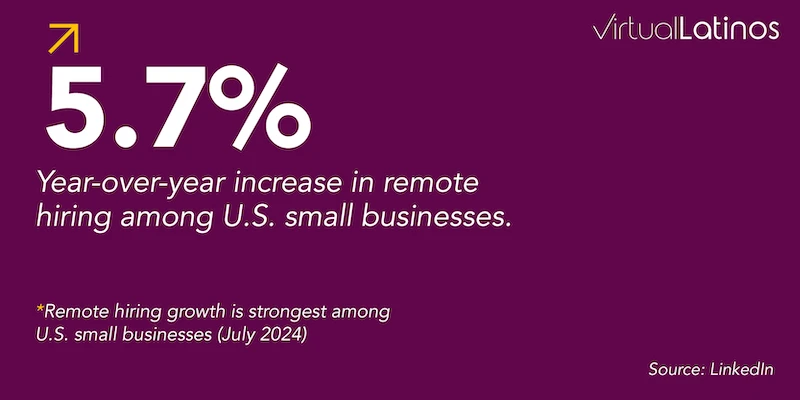
Even better, opportunity is expanding where remote talent thrives, U.S. small businesses increased their share of remote hires by 5.7% year over year (12 months ending July 2024), even as some larger firms tightened policies.
To keep your growth grounded, anchor your expectations to the market: the median U.S. pay for paralegals and legal assistants is $61,010 (May 2024), a solid benchmark as you set goals, track wins, and negotiate responsibilities.
What should I focus on during my first 90 days after being hired as a legal assistant?
Here’s a simple 90-day ramp that turns first-week nerves into steady wins.
Think in three lanes, clarity, cadence, and credibility, and stack small, repeatable habits that your attorney will feel every day.
- Clarity (Weeks 1–2)
- Map your scope: Confirm your job duties (e.g., administrative tasks, client communication, answering phone calls, schedule meetings, draft legal documents).
- Ask for examples of “great work” in your practice area (litigation, immigration, corporate, personal injury).
- Tool stack tour: Learn your firm’s DMS (NetDocuments, iManage, Box), e-signature (DocuSign), time-keeping, calendaring (Outlook/Google), e-filing portals, and CRM.
- Case rhythms: Request a simple checklist per matter (intake → tasks → filings → follow-ups → closeout).
- Cadence (Weeks 3–6)
Daily standup note: A 3-bullet update to your attorney: Yesterday I finished X, today I’m doing Y, I’m blocked by Z.
- Weekly “case traffic” board: Show due dates 30/14/7/3/1 days out.
- Document quality loop: Re-use firm templates; build your mini-playbook for captions, certificates of service, and exhibit indices.
- 3. Credibility (Weeks 7–12)
- Own a recurring deliverable: e.g., the Friday case-status email, a Monday calendar sweep, or monthly discovery tracker.
- Reduce errors visibly: Track error types (formatting, missed attachment, date mis-entry) and show your drop-off over time.
- Offer one efficiency win: A template pack, a naming convention, or a filing checklist that saves the team 10+ minutes per matter.
Agree on “office hours” in U.S. time zones, and set a 2-hour daily overlap window for live questions.
Make “response SLAs” explicit (e.g., “I acknowledge messages within 60 minutes, provide a plan within 4 hours”).
Follow this playbook for 90 days and you’ll shift from “new hire” to indispensable teammate, clear scope, predictable rhythm, and visible quality gains your attorneys can trust.
What does a legal assistant actually do day-to-day (and how do I get fast at it)?
As a new legal assistant, your day-to-day will vary by practice area, but the fundamentals stay the same: clear communication, airtight organization, and precise documentation.
Start with the core duties below and adapt them to your firm’s workflows and case types. Core duties you’ll likely handle (adapt based on your practice area):
- Client communication: intake calls, updates, collecting documents.
- Administrative tasks: answering phone calls, scheduling meetings, preparing agendas, maintaining calendars.
- Document prep: draft legal documents and correspondence (demand letters, retainer agreements, discovery shells, simple motions from templates).
- Case organization: file naming, bates stamping, exhibit lists, e-filing/e-service, deadline tracking.
- Research & evidence: basic factual research, retrieving records, managing discovery responses.
These align closely with the U.S. Occupational Outlook Handbook’s description of legal assistants’ work (organizing files, legal research, drafting, supporting hearings/trials).
Use it as a benchmark for your competency checklist.Use these responsibilities, and the U.S. Occupational Outlook Handbook, as your weekly competency checklist.
Layer in the speed hacks to work smarter, reduce rework, and earn trust faster. Mastering these basics is what opens the door to bigger responsibilities and promotion.

What KPIs prove I’m doing a great job in a remote setup?
Track performance you can see. These KPIs translate daily work into clear outcomes, use them to spot bottlenecks early and coach for consistency.
- Turnaround time: average hours from request → first draft.
- Right-first-time rate: % of deliverables with zero corrections.
- Deadline hit rate: % of tasks completed ≥24 hours before due date.
- Client responsiveness: median time to acknowledge messages.
- Template adoption: % of docs using approved templates.
keep flexibility, keep standards. Tie these metrics to weekly reviews and lightweight dashboards; you’ll reinforce quality, speed, and responsiveness while supporting remote work.
Exactly the dynamic LinkedIn’s research associates with stronger candidate engagement.
What skills get me promoted from junior to experienced legal assistant?
Ready to go beyond “tasks completed”? This level-up stack turns you into a force multiplier, skills you can demo live on a portfolio call and back with results.
Level-up stack (with examples you can show on a portfolio call):
- Document mastery: clean, court-ready formatting; tables of authorities; redline discipline.
- Deadline orchestration: matter timelines, tickler systems, statute-aware calendaring.
- Client stewardship: empathetic updates, bilingual clarity (ES/EN), expectation setting.
- Evidence handling: exhibits, bates labels, privilege tracking, deposition logistics.
- Tech fluency: e-filing platforms, PDF workflows (OCR, combine/split), templates/macros, AI aids for first drafts.
- Process design: intake scripts, discovery checklists, and “how-to” SOPs your team actually uses.
Package these wins as before-and-after metrics and one-slide SOP snippets.
Lead with outcomes (“cut review time by 20 min/case”), then show the artifact.
That’s how you signal senior-level value fast, especially for the clients, who prioritize measurable impact, clear artifacts, and bilingual professionalism.
How can I use AI without risking quality or confidentiality?
Use AI as an accelerator, not an arbiter. Let it draft and summarize while you own judgment, compliance, and final quality.
- Draft, don’t decide: Use AI to outline a motion or summarize discovery, but always validate against jurisdiction-specific rules and firm templates.
- Never paste sensitive data into unsecured tools; ask your firm for an approved, logged AI workspace.
- Create AI-ready prompts: e.g., “Summarize this deposition for a partner readout: include parties, dates, claims, 5 key quotes, and follow-ups.”
- Track the time saved (e.g., drafting cover pages, formatting citations) and re-invest it in higher-judgment tasks (checking deadlines, cross-referencing exhibits).
Keep it ethical, secure, and measurable: work inside approved tools, log your time saved, and reinvest those minutes into higher-value checks (rules, deadlines, exhibits).
That’s how AI lifts your output without lowering your standards.

FAQ (People-Also-Ask style)
What skills do you need to become a VA-style legal assistant?
- Organization & detail orientation (deadlines, filings, naming conventions).
- Communication & empathy (clients under stress, clear updates).
- Tech fluency (PDF/OCR, e-signature, calendaring, case-management).
- Writing basics (clean, template-driven drafting).
These match the qualities highlighted by the U.S. OOH for legal assistants.
Can I work as a legal assistant without a degree?
Sometimes, some employers hire and train high-potential candidates without formal legal education, especially in small firms.
Certifications and a redacted portfolio help demonstrate capability, particularly for cross-border remote roles.
What’s the average salary for a legal assistant in the U.S.?
The latest BLS data reports a median of $61,010 (May 2024).
Top-paying sectors include the federal government and finance/insurance.
Use this as a reference when negotiating scope and growth.
Where can I find remote VA jobs?
- Virtual Latinos (curated roles for Latin American talent supporting U.S. companies)
- Established remote boards and LinkedIn job filters.
Market data suggests candidate interest in flexible roles remains high, and companies offering flexibility attract more applicants, use that in your search.
Is remote work actually growing?
The mix is evolving: hybrid dominates, and remote hiring has increased among small U.S. companie, good signals for distributed legal support roles.
Get Hired as a Legal Assistant, Then Ramp Fast with Virtual Latinos
If you’re in LATAM and just landed the role (or you’re aiming for it), Virtual Latinos helps you shorten the learning curve and show measurable impact from week one.
- Apply to vetted roles with U.S. firms that already run remote.
- Grab the free “First 90 Days” checklist (status updates, calendar sweeps, file-naming).
- Join a live info session to map your path from junior to experienced.
We help you turn nervous first weeks into reliable wins, clear scope, steady cadence, visible quality.
Ready to get Hired as a legal assistant with a U.S. firm? Apply now to vetted openings with Virtual Latinos and accelerate your first 90 days.