
Remote work has completely transformed how people across Latin America and the world access job opportunities. Whether you’re early in your professional journey, transitioning careers, or ready to leverage your skills in the remote work economy, the demand for accessible entry points into remote professional work continues to grow.
Key Takeaways
- High Demand: Over 95% of workers desire remote flexibility, making it a standard expectation in the modern labor market.
- No Experience Needed: Entry-level roles like Customer Support and Virtual Assistance prioritize soft skills (reliability, communication) over formal degrees.
- Bilingual Advantage: Latin American professionals are increasingly sought after by U.S. companies for their cultural alignment and time-zone compatibility.
- Essential Tools: Proficiency with basic digital tools such as Google Workspace, Slack, and Canva is often sufficient to qualify for part-time roles.
- Legitimacy: Using specialized platforms like Virtual Latinos helps avoid scams and connects talent with verified U.S. clients.
This isn’t just a passing trend; it’s a fundamental shift in how people work.
Flexibility and freedom are major drivers, and remote work is no longer a fringe preference. According to U.S. Career Institute (2024), over 95% of workers want some form of remote work, with 54% preferring fully remote and 41% preferring a hybrid schedule. That means people aren’t just chasing remote because it’s trendy; they expect it.
For Latin Americans, this is a golden opportunity. Many U.S.-based companies are opening their (virtual) doors to bilingual talent in the region. But what if you don’t have formal work experience?
The opportunity is real: legitimate remote positions exist for professionals at every stage, including those just beginning their journey.
How Did We Get Here? The Remote Work Boom In Latin America
To understand where we are today, it’s worth looking at how we got here.
Just a few years ago, remote work wasn’t all that common in Latin America. It existed, sure, mostly in tech or freelance circles, but for most people, working from home for a company abroad seemed out of reach.
The pandemic in 2020 accelerated this transformation dramatically.
When the pandemic hit, companies had to adapt overnight. Offices closed, teams went digital, and suddenly, what once seemed optional became essential. Across the region, businesses started rethinking how work gets done, and remote work went from rare to routine.
A 2025 study by Jip de Jong at Utrecht University described this shift as one of the most significant labor market transformations in recent history. Companies that had never considered remote hiring suddenly embraced it, not just to survive, but because it worked.
“The COVID-19 pandemic gave rise to a surge in remote work in Latin America, one of the most impactful, large-scale labor transitions we are likely to witness in our generation,” de Jong writes.
What’s particularly significant: even after restrictions were lifted, many businesses chose to keep remote work as part of their long-term model. Why? Because it saves costs, boosts productivity, and gives people more flexibility, something workers now actively expect.
Today, remote work in Latin America is no longer a trend or a temporary fix. It’s become a normal and growing part of how people build careers, earn income, and connect with global opportunities.
For professionals ready to embrace remote work, this moment represents an unprecedented opportunity to build a meaningful, sustainable career.
Why Are So Many People Pushing For Remote Work Now?
Remote work offers more than location flexibility, though that benefit alone is significant. There are some real, practical reasons behind the remote work boom:
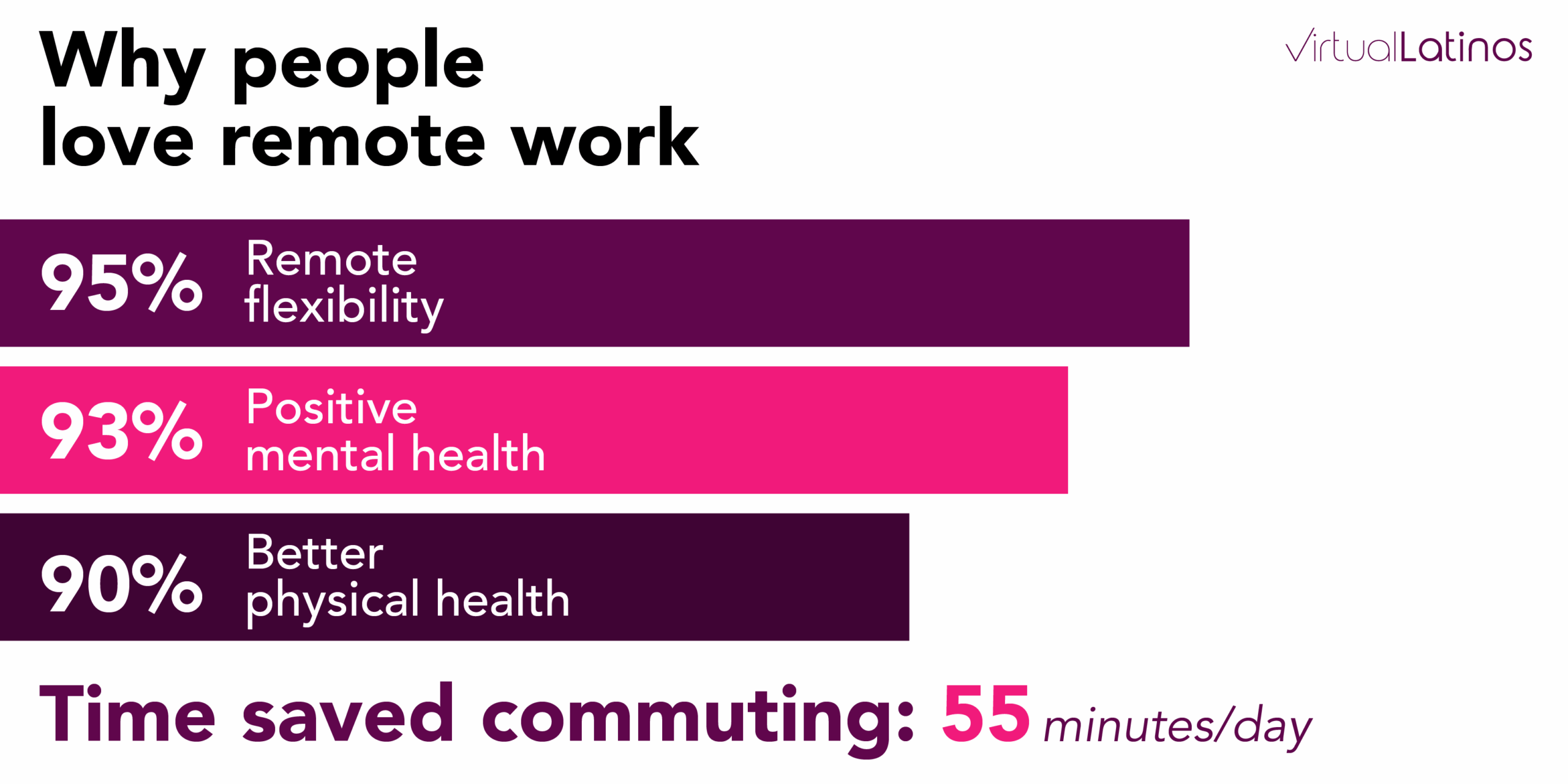
- Massive employee preference: Over 95% of workers want some degree of remote flexibility.
- Commute/time savings: Remote workers report saving approximately 55 minutes per day by cutting commuting. U.S. Career Institute
- Health & wellbeing improvements: 93% say remote work has positively impacted their mental health, and 90% report better physical health.
- Cost savings for companies: Employers can save significantly by cutting down on physical office costs, for example, remote setups reduce expenses related to office rent, utilities, and supplies
For business owners, this trend means two things: more candidates are seeking remote work, and remote roles are increasingly normalized, even in part-time roles.
Can You Get a Part-Time Remote Job Without Previous Remote Experience?
Many of the most popular entry-level online jobs are accessible to professionals transitioning from traditional office environments rather than previous remote roles. Employers often value transferable skills, such as communication, organization, customer service, and problem-solving, just as much as prior remote work experience.
Virtual Latinos matches U.S. businesses with experienced Latin American professionals. As part of its selection process, applicants must have at least two years of professional work experience. Previous remote work experience isn’t always required, but candidates should be able to demonstrate strong transferable skills and the ability to thrive in a remote work environment.
What Kind of Part-Time Remote Jobs Can You Do With No Experience?
Here are the most common part-time jobs available for remote work:
| Job Role | Primary Responsibilities |
| Customer Support | Handling chat, email, and phone inquiries to solve customer issues. |
| Virtual Admin Assistant | Managing calendars, cleaning up emails, and performing basic scheduling tasks. |
| Social Media Assistant | Scheduling posts, responding to comments, and basic content curation. |
| Appointment Setter | Following up with leads and booking meetings for sales teams. |
Are These Jobs Actually Legitimate?
Yes, but it depends on where you look. Remote scams are real, and you need to stay sharp. That’s why many Latin American professionals prefer applying through platforms like Virtual Latinos, which match candidates with verified U.S. clients and offer community support, vetting, and mentorship.
Why Soft Skills Can Land You a Remote Job (Even Without Experience)
If you’re concerned about lacking formal experience, know that you’re not alone, and that many employers prioritize potential over credentials.
In fact, many companies hiring for part-time remote roles are actively looking for people who are dependable, easy to work with, and quick to learn, not necessarily people with long resumes.
What employers value most in entry-level candidates:
- Clear communication: Can you write emails, chat with clients, and express ideas clearly?
- Organization: Do you show up on time, keep track of deadlines, and manage your calendar well?
- Digital familiarity: Have you used tools such as Google Docs, WhatsApp, or even Instagram Stories?
- Willingness to learn: Are you someone who picks things up quickly and isn’t afraid to try?
If any of these describe you, you already possess qualities that set you apart from other candidates.
Want to go a step further?
You don’t need to spend money to build your skills. There are free (and beginner-friendly) online courses where you can learn at your own pace and even get certificates:
- Google Digital Garage
- Coursera
- HubSpot Academy
- Virtual Latinos Academy – If you’re part of the Virtual Latinos community, you’ll get exclusive access to their training hub, built specifically for bilingual professionals in Latin America. It’s a great place to learn job-ready skills and get support from mentors.
Even completing one short course in communication, productivity, or digital tools can make your resume stand out and show employers you’re serious about learning.

Do U.S. Companies Really Hire Latin Americans With No Experience?
Yes, and the trend is accelerating.
According to Forbes, U.S. companies are increasingly outsourcing to Latin America because the region offers a cost-effective, highly educated workforce with strong STEM backgrounds, cultural alignment, and time-zone compatibility. These factors make Latin American talent especially attractive for remote roles, particularly in customer support, admin services, and tech-adjacent jobs.
And many are hiring for roles that don’t require years of experience. In fact, companies increasingly prefer to train new hires who show great potential.
What Tools Should You Learn To Qualify For Part-Time Online Work?
You don’t need to master everything, but getting comfortable with a few core tools can instantly make you more attractive to remote employers:
- Google Docs / Gmail / Calendar
- Zoom and Slack
- Trello / ClickUp / Notion
- Canva (for basic design tasks)
- ChatGPT or Grammarly (to polish your writing)
If you’re serious about building a remote career, don’t wait until you land the job to start learning. Get hands-on:
- Create a sample calendar managing a fictional CEO’s week.
- Build a Trello board for a household task or school project.
- Write and format a document in Google Docs as if it were for a real client.
These little “mock tasks” can turn into great portfolio samples and show recruiters that you’re proactive, organized, and ready to roll.
Where Can You Actually Apply For Remote Jobs Without Experience?
If you’re serious about finding part-time remote jobs with no experience, skip the generic job boards and start with platforms built for beginners, especially those that focus on Latin American professionals.
Virtual Latinos is a great place to start. The platform specializes in matching bilingual remote professionals from Latin America with U.S.-based businesses. Even if you’ve never worked online before, their team offers guidance, training resources, and curated job opportunities that are beginner-friendly and 100% legit.
How To Stand Out In Remote Work As A Beginner
Remote work is more than just working from home. You need to show up, deliver results, and communicate clearly.
Here’s how to stand out:
- Build a great resume focused on transferable skills.
- Write a personalized cover letter that tells your story.
- Practice interviews with a friend or mentor.
- Set up your home workspace with good lighting, audio, and background.
- Use the right tools and show that you can navigate digital tasks confidently.
Get inspired by this career‐path guide from Virtual Latinos to see real examples of how people with little experience became top‐performing virtual assistants.
Common Beginner Mistakes (And How to Avoid Them)
- Customize your application materials. Rather than using a generic resume, tailor each application to highlight the specific skills and experiences that match the role’s requirements.
- Don’t: Forget about time zones.
Do: Always mention your availability in the client’s time zone. For example: “Available Monday–Friday, 9 AM to 5 PM EST.”
- Don’t: Submit applications with typos or grammar errors.
Do: Proofread everything. Tools like Grammarly can help you polish your writing and avoid small mistakes that make a big impression.
- Don’t: Show up to interviews unprepared.
Do: Test your audio, camera, and lighting ahead of time. Make sure you’re in a quiet space with a clean, professional-looking background.
- Don’t: Stay quiet during interviews.
Do: Ask at least one or two questions. It shows that you’re engaged, curious, and genuinely interested in the role.
FAQs About Part-Time Remote Jobs With No Experience
What skills do you need to work remotely?
Basic tech skills, clear communication, time management, and a customer service mindset are essential. Bonus if you’re bilingual (English-Spanish).
Can you be a virtual assistant without skills?
Everyone starts somewhere! If you can learn fast and stay organized, you’re already ahead.
Where can you find entry-level remote virtual assistant jobs?
Start with platforms like Virtual Latinos or check real listings on LinkedIn. Use search terms like “remote assistant no experience” or “entry-level virtual assistant jobs.”
Do you need previous work experience to apply to Virtual Latinos?
Yes, applicants should have at least 2 years of relevant professional experience and be able to demonstrate strong communication, reliability, organizational skills, and the ability to work independently.
Experience from traditional office roles can still be valuable, especially if it shows transferable skills that apply well to remote work, such as customer service, administration, marketing, sales, operations, finance, legal support, or project coordination.
Final Thoughts On Why Now Is The Time To Apply
Success in remote work isn’t determined by a flawless resume; it’s built on demonstrating reliability, embracing continuous learning, and communicating clearly and professionally.
Your path to meaningful remote work starts with the right partnership. At Virtual Latinos, we don’t just help you find a job; we connect you with U.S. businesses that value your expertise, respect your professional growth, and offer the stability and purpose you’re seeking.
Your bilingual skills, cultural awareness, and eagerness to grow are incredibly valuable, and employers are looking for people just like you.
There’s never been a better time for Latin Americans to join the remote workforce.
Start your remote journey with Virtual Latinos
Ready to take your first step into the world of online work? Apply here to join Virtual Latinos and connect with U.S. clients looking for bilingual remote professionals like you.
Let’s build your remote future together.