If you’ve ever dreamed of working in the healthcare sector without being in a hospital or clinic, becoming a Medical Virtual Assistant could be the perfect opportunity for you.
This role not only allows you to contribute to patient care from anywhere but is also experiencing significant growth.
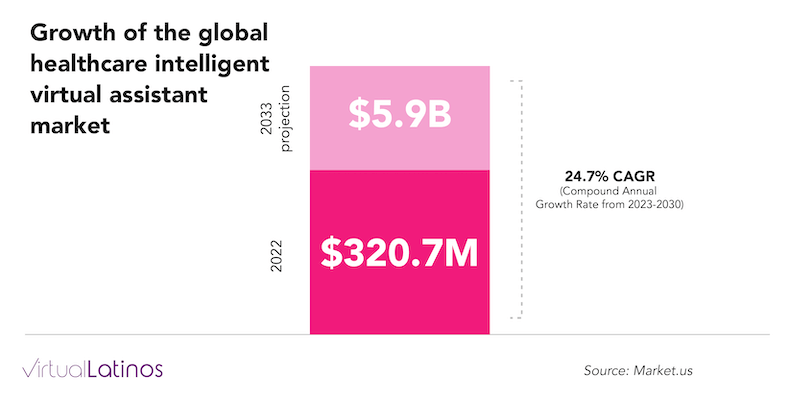
According to a report by Market.us, the global healthcare intelligent virtual assistant market was valued at $320.7 million in 2022 and is expected to grow at a compound annual growth rate of 24.7% from 2023 to 2030.
These figures highlight a clear trend: the demand for Medical Virtual Assistants will continue to rise in the coming years, making it a field with excellent career prospects.
But what exactly does a Medical Virtual Assistant do, and what skills do you need to succeed in this profession? This job combines organization, technology, and medical knowledge to efficiently support healthcare professionals.
If you’re wondering what skills are essential for success in this field and where you can learn them, this guide has all the answers.
Join us on this journey to discover how to master the art of being a Medical Virtual Assistant and make the most of this growing career opportunity.
Why Medical Virtual Assistant Skills Are in High Demand
The need for medical virtual assistants is skyrocketing, and it’s not by chance. Several key factors are driving this surge, reflecting significant changes in how healthcare operates today.
One major reason is that healthcare practices are becoming more complex, requiring skilled professionals who can efficiently handle administrative and operational tasks. Virtual assistants play a crucial role in managing essential processes every day, from scheduling appointments to handling patient communications.
Their ability to streamline workflows allows doctors and specialists across different medical specialties to focus more on patient care rather than administrative burdens.
Thanks to electronic medical records (EMR), keeping track of patient information has become more advanced but also more challenging.
Medical virtual assistants are like superheroes in this space, effortlessly navigating and managing EMRs to ensure data accuracy and compliance with regulations such as HIPAA. Their expertise helps healthcare providers maintain smooth and secure operations.
The COVID-19 pandemic has turned the spotlight even more on virtual healthcare. With the need for social distancing and fewer face-to-face interactions, virtual healthcare services are on the rise.
This is where medical virtual assistants come in, helping healthcare pros extend their reach without being physically present. They’re great at setting up remote consultations, managing patient data safely, and making sure everything follows the rules.
Looking ahead, the future of healthcare seems to be a mix of in-person and virtual care. Medical virtual assistants, with their tech skills and ability to adapt, are set to become super important in this changing healthcare world. As we all want healthcare that’s easy to access, efficient, and tech-friendly, having medical virtual assistant skills is becoming a big deal to meet these growing needs.
Essential Skills for a Medical Virtual Assistant
To become a successful medical virtual assistant, mastering certain essential skills is crucial. This section explores these skills in detail, highlighting how they contribute to the overall efficiency of a virtual assistant in a medical care setting and improve practice operations.
Medical terminology and knowledge
Proficiency in medical terminology is fundamental for a medical virtual assistant. Understanding medical words and concepts enables effective communication with healthcare professionals and ensures accurate interpretation of medical documents.
This knowledge facilitates seamless coordination between the virtual assistant and the healthcare team, helping to prevent miscommunication that could compromise medical care.
Electronic Medical Records (EMR) Management
In the digital era, electronic medical records (EMR) have become the backbone of medical specialties and healthcare practices. A medical virtual assistant must be proficient in managing EMR systems, including accurately inputting patient data, retrieving records promptly, and ensuring the security and confidentiality of medical information.
Mastery of EMR management allows virtual assistants to support healthcare providers in maintaining smooth practice operations and delivering optimal patient care.
Appointment scheduling and calendar management
Efficient appointment scheduling and calendar management are essential skills for a medical virtual assistant. They should be adept at organizing and coordinating appointments, ensuring that healthcare providers’ schedules are optimized.
This involves liaising with patients, accommodating urgent cases, and managing any changes or cancellations efficiently. By managing calendars effectively, virtual assistants contribute to the smooth running of medical practices.
Patient communication and customer service
Excellent communication skills and a patient-centered approach are essential for medical virtual assistants.
They often serve as the first point of contact for patients, addressing inquiries, scheduling appointments, and providing general information.

A successful virtual assistant should be empathetic, patient, and professional when handling sensitive situations. By fostering positive patient communications, they enhance the overall experience and reputation of the medical practice.
Medical billing and coding
A core competency for a medical virtual assistant is proficiency in medical billing and coding. They must be knowledgeable about insurance claim procedures, accurately coding diagnoses and treatments, and submitting claims efficiently.
By mastering these skills, virtual assistants help healthcare providers receive timely reimbursements, ensuring the financial stability of the practice operations.
Understanding HIPAA Compliance
HIPAA (Health Insurance Portability and Accountability Act) compliance is critical in the healthcare industry, ensuring patient data security and privacy.
A medical virtual assistant must deeply understand HIPAA regulations and compliance requirements. They should be adept at safeguarding confidential patient information, adhering to privacy policies, and implementing necessary security measures.
By ensuring HIPAA compliance, virtual assistants contribute to maintaining patient trust and legal adherence in medical specialties.
Time management and organization skills
Effective time management and organization skills are essential for a medical virtual assistant to handle multiple tasks efficiently. They should be proficient in prioritizing tasks, managing deadlines, and maintaining an organized workflow.
By developing these essential skills, medical virtual assistants play a pivotal role in the efficiency and success of healthcare providers across various medical specialties.
Resources and Courses for Improving Medical Virtual Assistant Skills
In the dynamic field of medical virtual assistance, continual skill enhancement is crucial for staying competitive and providing high-quality support.
Fortunately, a plethora of resources and courses are available to empower individuals seeking to advance their medical virtual assistant skills while ensuring they stay up to date with best practices in electronic health record management, medication handling, and HIPAA training programs.
Online Learning Platforms
- Coursera: This widely recognized platform offers an array of courses tailored to enhance medical virtual assistant skills. From mastering medical terminology to refining Electronic Medical Record (EMR) management, Coursera provides a flexible and interactive education environment that helps ensure consistency in medical administrative tasks.
- Udemy: With a diverse range of courses, Udemy enables learners to delve into specific areas of interest. Medical virtual assistants can benefit from courses covering customer service excellence, advanced administrative skills, and emerging technologies in healthcare.
- LinkedIn Learning: As a platform deeply rooted in professional development, LinkedIn Learning delivers courses that focus on soft skills crucial for effective medical virtual assistance.
Courses on communication, interpersonal skills, time management, and HIPAA training programs significantly contribute to a medical virtual assistant’s success.
Professional organizations
- American Association of Medical Assistants (AAMA): Joining AAMA provides access to a wealth of resources designed to elevate the proficiency of medical assistants. From industry-specific publications to webinars led by experts, AAMA ensures that members are well-informed about the latest advancements and best practices.
- American Health Information Management Association (AHIMA): AHIMA is a cornerstone for professionals involved in health information management. Medical virtual assistants can benefit from AHIMA’s resources, which cover data security, HIPAA training programs, and privacy compliance—crucial aspects of managing medical care records while ensuring consistency in documentation.
Webinars and networking opportunities
Apart from formal courses, webinars and networking play pivotal roles in skill development:
- Webinars: AHIMA is a cornerstone for professionals involved in health information management. Medical virtual assistants can benefit from AHIMA’s resources, which cover data security, HIPAA training programs, and privacy compliance—crucial aspects of managing medical care records while ensuring consistency in documentation.
- Networking opportunities: Engaging with fellow virtual assistants, healthcare professionals, and industry experts through conferences, online communities, and networking events fosters collaboration and exposes individuals to diverse perspectives in medical specialties.
By leveraging these resources and courses, individuals can not only stay abreast of the latest trends but also develop a well-rounded skill set that propels their career in medical virtual assistance to new heights.
Continuous learning, participation in education programs, and engagement in HIPAA training programs are key ingredients for success in this dynamic and ever-evolving field.

Finding Medical Virtual Assistant Job Opportunities
As the demand for remote healthcare support continues to rise, aspiring medical virtual assistants can leverage various channels to discover promising job opportunities. The digital landscape provides a plethora of options for those seeking roles in this dynamic field.
Online job boards
Platforms such as Indeed, LinkedIn, and Upwork serve as excellent hubs for virtual medical assistant job listings. Regularly checking these websites allows individuals to stay updated on the latest openings, providing a comprehensive view of the diverse opportunities available in the virtual healthcare sector.
Networking and professional organizations
Building a strong professional network is crucial for securing virtual medical assistant positions. Joining relevant professional organizations, such as the American Association of Medical Assistants (AAMA), can offer valuable connections and insights.
Attend virtual career fairs hosted by these organizations to interact directly with potential employers and learn about the latest trends in the industry.
Direct outreach to healthcare practices
Taking a proactive stance, individuals can reach out directly to healthcare practices, clinics, and hospitals. Offering virtual assistant services to these organizations demonstrates initiative and can open doors to opportunities that might not be publicly advertised.
Crafting a compelling pitch that highlights the benefits of hiring a medical virtual assistant can make a lasting impression on potential employers.
Specialized platforms like Virtual Latinos
For those seeking a unique opportunity, enrolling with platforms like Virtual Latinos can be a game-changer. Setting it apart, this platform specializes in connecting skilled professionals from Latin America with businesses and health practices in the United States.
As a medical virtual assistant, one can leverage their expertise while working remotely, providing crucial support to US-based healthcare providers. This innovative approach not only allows professionals to contribute to the global healthcare landscape but also fosters cross-cultural collaboration.
Virtual Latinos: Your Gateway to Medical Virtual Assistant Opportunities
In the realm of medical virtual assistance, Virtual Latinos stands out as an exceptional option for Latin American professionals seeking impactful roles with US businesses.
Whether you’re looking for short-term projects or aiming to build a long-term working relationship with a healthcare provider, Virtual Latinos offers tailored opportunities that align with your skills and expertise. Here’s why this platform is the ideal choice for medical virtual assistants:
-
Remote work expertise: Acknowledging the growing trend of remote work in the healthcare sector, Virtual Latinos empowers medical virtual assistants to leverage their expertise while working remotely.
This flexibility is particularly valuable in the evolving landscape of virtual healthcare services, allowing professionals to provide crucial support to US-based healthcare providers from the comfort of their own locations.
-
Diverse skill sets: Virtual Latinos attracts a diverse pool of talent with various skills and specializations within the healthcare industry.
-
Whether a medical virtual assistant specializes in medical billing, EMR management, electronic health records, or patient communication, the platform caters to a broad range of healthcare needs, offering opportunities for professionals with different expertise.
-
Cultural alignment: Virtual Latinos recognize the significance of cultural understanding in the healthcare industry.
-
By connecting Latin American professionals with US-based healthcare providers, the platform fosters long-term working relationships that thrive on seamless communication and collaboration.
-
Bilingual proficiency: Fluency in both English and Spanish is a distinct advantage for medical virtual assistants on Virtual Latinos. In healthcare settings, effective communication is critical, and bilingual virtual assistants play a key role in bridging language barriers.
Many practices prefer to work with the same virtual assistant who understands their workflow and patient demographics, ensuring smooth interactions and high-quality support.
-
Tailored matching process: Virtual Latinos employs a meticulous matching process, ensuring that the skills and expertise of virtual assistants align with the specific needs of US healthcare practices.
This tailored approach enhances the likelihood of successful collaboration, as virtual assistants are matched with positions that align with their skill set and the unique requirements of healthcare providers.
For Latin American medical virtual assistants seeking meaningful and long-term opportunities with US businesses, Virtual Latinos emerge as a gateway to a fulfilling career.
By joining the platform, professionals can contribute to the global healthcare landscape while benefiting from a system that values cultural diversity, professional growth, and remote work proficiency.
Whether you’re looking for a long-term working relationship or a stepping stone into the healthcare industry, Virtual Latinos provides the ideal path for success.
Become a Master in Medical Virtual Assistant Skills
By acquiring proficiency in medical terminology, EMR management, appointment scheduling, patient communication, medical billing, HIPAA compliance, time management, and organization skills, individuals can excel in this role.
Embracing this dynamic role benefits healthcare practitioners and contributes to enhancing patient care and overall practice efficiency.
Seeking a rewarding career as a medical virtual assistant? Join Virtual Latinos for exceptional job opportunities.