
International remote job opportunities are no longer reserved for the lucky few.
Today, Latin American professionals have a real shot at building global careers—without settling for low-paying gigs or competing in exhausting bidding wars.
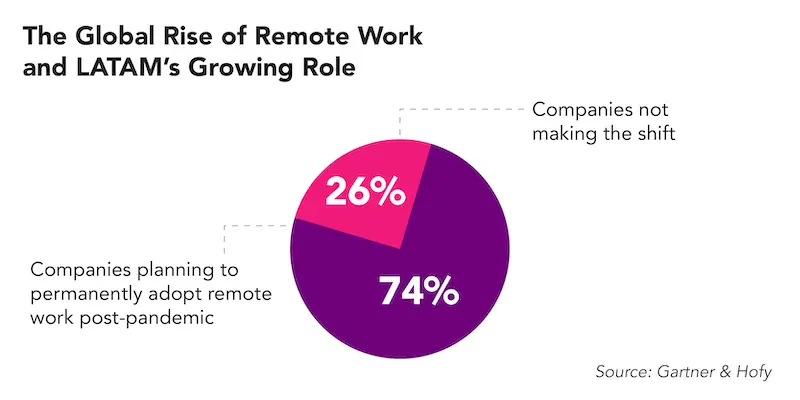
And the timing couldn’t be better: 74% of companies plan to permanently shift to more remote work post-pandemic, according to Gartner.
This shift is creating more space for talented professionals across the globe to access flexible, high-quality jobs.
Latin America, in particular, is gaining traction. In fact, U.S. companies increased their remote hiring in the region by a staggering 286% in 2022, showing just how much demand there is for bilingual, skilled, and reliable talent from this part of the world.
In this blog, we’ll walk you through how to tap into this momentum—helping you land legitimate, well-paid international remote work that values your expertise and empowers you to build the career you’ve been dreaming of, on your own terms.
Why Latin American Talent Is in High Demand for Remote Careers
Let’s start with the big picture. The remote work boom isn’t slowing down. According to Buffer’s 2023 State of Remote Work, 98% of professionals want to work remotely for the rest of their careers.
Companies in the U.S., Canada, and Europe are increasingly hiring from Latin America because:
- Time zones align for real-time collaboration
- Many professionals are bilingual or multilingual
- Digital and technical skills are competitive
- Hiring is more cost-effective compared to local options
According to LinkedIn’s Global Talent Trends, remote job postings grew over 400% between 2020 and 2023 in North America alone. That signals an ever-growing pool of remote recruiting opportunities for LATAM professionals.
The Problem with Bidding Platforms: Why Freelancers Struggle on Upwork and Fiverr
Freelance platforms like Upwork and Fiverr have grown exponentially, offering access to a global marketplace of clients and freelancers.
For newcomers, these platforms can seem like a great way to get started. However, the reality is that they often create a race to the bottom—where price undercuts quality, and freelancers compete not on value but on who can offer the lowest bid.
Here are the most pressing issues with bidding platforms:
1. Oversaturation and global competition
On platforms like Upwork, you’re often competing with hundreds of freelancers from around the world—many of whom are willing to work for a fraction of the price due to regional differences in cost of living.
This oversupply drives prices down and makes it extremely difficult for professionals to stand out based on merit alone.
2. Short-term, low-paying gigs dominate
While high-quality, long-term contracts do exist, the majority of listings are short-term, low-budget gigs.
According to a 2023 study by Payoneer, over 60% of freelancers on bidding platforms earn less than $10 per hour in their first year—highlighting the limited earning potential without a strong portfolio or premium niche.
3. Reduced professional autonomy and pricing power
Freelancers are pressured to accept lower rates just to secure projects. Since these platforms are transaction-based and client-centric, freelancers rarely have the leverage to negotiate better terms, benefits, or long-term collaboration.
This erodes both professional value and motivation over time.
4. Misallocation of time and energy
Instead of focusing on delivering quality work or honing skills, many freelancers report spending more time applying for jobs than actually working. This inefficient use of time makes it hard to achieve meaningful career progress or consistent income.
5. Barriers to long-term career development
If your goal is to build a sustainable remote career, relying on these platforms may hinder more than help. Without control over client acquisition, pricing, and project scope, it’s difficult to develop a scalable freelance business model.
More importantly, there’s limited opportunity for relationship-building, specialization, or brand development, which are essential for long-term success.

Remote Work from Home Opportunities: What You Should Be Doing Instead
It’s time to move away from constantly pitching your services and start positioning yourself for real, career-building international remote job opportunities. Here’s how:
Specialize in high-demand remote roles
Generic resumes and skill sets no longer cut it. Companies are looking for specialists who can plug right into their teams. Focus on roles that are consistently among the jobs with the most remote opportunities, such as:
- Virtual Assistants (administrative or marketing focused)
- Digital Marketers (SEO, paid media, email marketing)
- Social Media Managers
- Project Coordinators
- Customer Success Specialists
Work with remote-first staffing agencies
Skip the pitching altogether. Remote-first staffing agencies do the heavy lifting for you by matching you with vetted international companies.
At Virtual Latinos, for instance, we connect talented Latin American professionals with high-quality clients across the U.S., Canada, and other English-speaking countries.
You don’t need to:
- Pay to apply
- Bid on jobs
- Negotiate with unreliable clients
Instead, you get access to curated international remote job opportunities with ongoing support to grow your career.
Want proof it works? Explore our success stories—many of our team members started part-time and are now thriving in full-time remote careers.
Optimize your resume for remote work
A strong resume shows more than just experience. It demonstrates that you’re ready for remote collaboration. Here’s what you should include:
- Tools you know: Slack, Zoom, Asana, HubSpot, Trello
- Remote-specific skills: time management, self-direction, written communication
- Certifications or remote-friendly courses (from platforms like Coursera, Udemy, or LinkedIn Learning)
Add a brief Loom video introduction or calendar link to increase your chances of being contacted.
Join remote work communities
A huge number of remote recruiting opportunities are shared in niche communities long before they reach public job boards. Be present in:
- Remote Work LATAM (Facebook, LinkedIn)
- Remotive.io’s Slack group
- Reddit threads focused on digital nomads and remote careers
Networking helps build your visibility and gives you inside access to remote careers that others never even see.
Be clear and confident in your pitch
Whether you’re applying directly or working with an agency, companies love candidates who are transparent and self-aware. Make sure to clearly communicate:
- Your availability (hours per week, time zone)
- Preferred communication style
- Salary expectations
- Preferred types of clients or industries
This clarity helps match you with remote work from home opportunities that are aligned with your goals—not just short-term gigs.
Remote Jobs with the Most International Opportunities in 2025
According to FlexJobs and Owl Labs, here are the roles experiencing the most global hiring demand:
| Remote Role | Reason for Demand |
| Executive Assistants | Executives need support across time zones |
| Digital Marketers | Global teams rely on remote marketing talent |
| Customer Success Specialists | Companies need bilingual client support |
| Sales Development Representatives | Remote outreach teams are expanding |
| Community Managers | Brands need global engagement 24/7 |
You can find these roles in abundance through agency sites or platforms like Virtual Latinos, without competing in endless bidding wars.

Frequently Asked Questions (FAQs)
What are international remote job opportunities?
These are remote jobs offered by companies located in different countries, usually the U.S., Canada, or Europe, that are open to hiring professionals globally—especially from Latin America.
Do I need to speak perfect English?
No, but strong communication skills are key. Intermediate to advanced English is generally required for most international remote job opportunities, especially when working with English-speaking clients.
How can I avoid scams when applying for remote jobs?
Stick with trusted platforms or agencies. Don’t pay fees to apply for jobs. Avoid vague offers or requests for personal financial information. Agencies like Virtual Latinos pre-screen every employer before assigning any role.
Can I find a remote job without previous experience?
Yes. Entry-level remote work from home opportunities exist, especially for those with soft skills in customer service, writing, or administration. Many agencies and training programs help new professionals get started.
No More Bidding—Just Real Remote Jobs
Gone are the days when Latin American professionals had to settle for underpaid gigs or fight through crowded bidding platforms. Today, international remote job opportunities are accessible, abundant, and aligned with your potential—if you know where to look.
Whether you’re just starting out or ready to level up, you don’t have to figure it all out alone. With resources like VL Academy, you can gain the skills, tools, and confidence to stand out in the global market—and then get matched with real companies that value what you bring to the table.
Stop chasing short-term gigs. Start building your remote career.
Apply today to access high-quality remote jobs. No bidding, no fees—just real international remote job opportunities designed to help you grow.