
| TL;DR |
|
Landing a remote job with a U.S. company is one thing. Thriving in it requires knowing how Americans actually work, communicate, and measure success, and that knowledge is what sets you apart.
Understanding how U.S. workplaces operate is one of the most powerful steps you can take toward building trust with a U.S. client from day one.
Why U.S. Work Culture Knowledge Sets You Apart as a Virtual Assistant
Cultural fluency is one of the most powerful advantages you can bring to a U.S. employer. When you show cultural awareness during interviews or early interactions and follow the basics of U.S. business etiquette in remote collaboration, you signal that onboarding will be smooth.
Your client won’t have to explain why they expect a response within 24 hours or why they give feedback so directly. You already get it, and that makes you valuable from day one.
Key Differences Between U.S. and Latin American Work Culture
The contrast between American and Latin American professional environments can feel significant at first. Understanding these differences isn’t about choosing sides; it’s about giving yourself the knowledge to navigate both worlds with confidence and ease.
| Dimension | U.S. Work Culture | Latin American Work Culture |
| Communication style | Direct and explicit | Relationship-focused, indirect |
| Priority focus | Task completion | Building personal connections |
| Success measurement | Individual achievement | Team and collective results |
| Time orientation | Strict punctuality | Flexible scheduling |
| Authority structure | Flat, accessible managers | Hierarchical, formal respect |
Direct communication vs relationship-first approaches
Americans practice what communication experts call low-context communication. The words carry the full message, and there’s little reading between the lines. A U.S. employer might say “this report has errors that need fixing” without softening the message first.
Latin American communication often relies on context, tone, and relationship dynamics to convey meaning. You might be used to managers who build rapport before addressing problems. Recognizing differences in workplace communication styles helps you interpret American directness as efficiency rather than rudeness.
Task-oriented priorities vs people-oriented priorities
U.S. employers often prioritize completing work over extended social conversation. Business conversations tend to be shorter and more focused on outcomes. You might notice that American clients jump straight into agenda items during meetings, with small talk lasting only a minute or two.
Individual achievement vs collective success
American workplaces frequently reward personal initiative and individual contributions. Your U.S. client likely wants to know what you specifically accomplished, not just what the team achieved together. Taking ownership of your tasks and being comfortable highlighting your personal impact during check-ins matters here.
Structured time vs flexible time perception
Americans treat time as a fixed resource. Meetings start at the scheduled time, and deadlines represent firm commitments rather than general targets. If a meeting is scheduled for 2:00 PM, joining at 2:05 PM already feels late to most American clients.
Flat hierarchies vs traditional authority structures
Many U.S. employers prefer informal working relationships where you call them by their first name and share ideas openly. Flatter structures tend to keep communication open and reduce the bureaucratic barriers that can make employees hesitant to speak up.
How U.S. Employers Communicate and What They Expect from You
Professional communication with American clients follows predictable patterns once you understand them. Mastering expectations around emails, meetings, and feedback helps you appear polished and reliable.
Low-context communication explained
Low-context communication means the words themselves carry the full message. Americans expect you to be explicit, ask clarifying questions when something is unclear, and confirm your understanding directly. If you’re unsure about an instruction, asking “just to confirm, you want me to complete X by Friday at 3:00 PM EST?” is appreciated, not annoying.
What if you do not understand an instruction or cultural reference?
Ask clarifying questions immediately rather than guessing. Americans respect this as professional behavior. A quick “could you clarify what you mean by X?” prevents misunderstandings.
Email and messaging standards in American workplaces
Overly formal openers or lengthy preambles can slow down your message and feel out of place in American inboxes. American professionals appreciate getting to the point quickly because it signals respect for their time.
- Keep emails brief: Get to the point within the first two sentences.
- Use clear subject lines: Summarize the content so recipients can prioritize
- Respond within one business day: Even a quick acknowledgment shows reliability.
- Be direct about requests: State what you need and by when
Video call and meeting etiquette
Most U.S. employers expect cameras on during video calls unless bandwidth issues prevent it; a clean, professional background and good lighting signal that you take the interaction seriously. Mute yourself when not speaking, and come prepared with relevant information rather than figuring things out during the meeting.
How Americans give and receive feedback
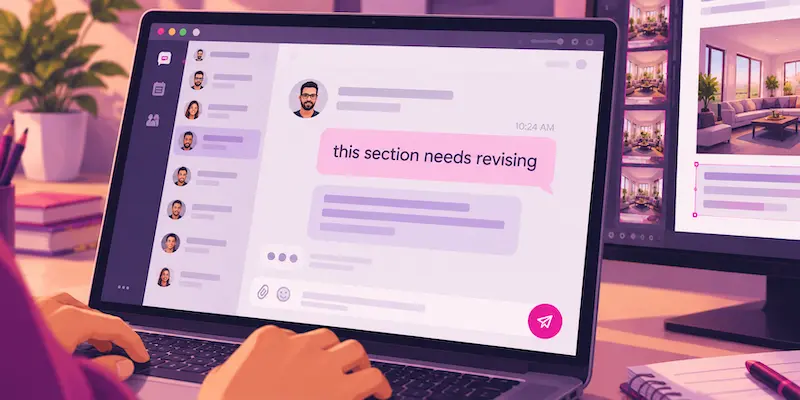
Direct feedback is normal in American workplaces and rarely carries personal judgment. When your client says “this needs improvement,” they’re addressing the work, not criticizing you as a person. U.S. employers also expect honest status updates, even when news is bad. Telling them early that a deadline might slip earns more respect than staying silent and missing it.
How do I handle a disagreement with my U.S. employer professionally?
Address concerns directly but respectfully, focusing on solutions rather than blame. Choose the right communication channel for sensitive topics. A video call often works better than text for nuanced conversations.
Time Management and Punctuality Expectations in U.S. Business Culture
Punctuality represents a core professional value in American business culture. Understanding this helps you navigate one of the most common adjustment areas for LATAM virtual assistants.
Why deadlines are non-negotiable for American employers
Missing a deadline damages trust significantly with U.S. clients. They often have their own commitments tied to your deliverables, so delays create ripple effects throughout their business. The U.S. workplace runs on personal accountability and measurable results, which is exactly why silence around a slipping deadline reads worse than the delay itself.
Managing time zone differences effectively
Working across time zones requires intentional coordination. Confusion about which time zone applies to a deadline creates unnecessary problems.
- Always confirm time zones: Ask whether deadlines are in your time or theirs.
- Use scheduling tools: Applications that display multiple time zones prevent errors.
- Establish overlap hours: Agree on core times when you’re both available.
- Send end-of-day summaries: Update your client before your workday ends if theirs continues.
Setting clear availability expectations
Communicate your working hours upfront so your client knows when to expect responses. Americans generally respect boundaries when you establish them clearly from the beginning. If you work 9:00 AM to 6:00 PM in your time zone, say so.
How available do I have to be outside of agreed working hours?
Boundaries are acceptable and respected when you communicate them clearly upfront. Most U.S. employers don’t expect immediate responses outside working hours as long as you’ve set clear expectations.
What Proactive Behavior Looks Like to U.S. Employers
Proactive behavior is already part of your professional DNA, and in U.S. work culture, it’s one of the qualities American employers value most. The key is understanding how to channel it in ways that align with their expectations.
Anticipating needs before being asked
Proactive behavior means identifying what comes next and acting on it without waiting for instructions. If you finish a task and notice a related issue, addressing it shows initiative. For example, if you’re organizing files and notice outdated information, flagging it or suggesting updates shows the kind of thinking American employers value.
When to ask questions vs decide independently
Finding the right balance between initiative and checking in takes practice. Generally, you can make decisions independently when they’re easily reversible or low-risk. Anything involving significant time, money, or client-facing impact warrants a quick confirmation.
When uncertain, a brief message like “I’m planning to handle this by doing X. Let me know if you’d prefer a different approach” shows initiative while respecting boundaries.
Demonstrating ownership without overstepping boundaries
Ownership means taking responsibility for outcomes and following through completely. It doesn’t mean acting without authorization or making decisions above your role. You can show ownership by tracking your tasks to completion, flagging obstacles early, and ensuring nothing falls through the cracks.
How do I discuss compensation or request a raise with a U.S. client?
Americans expect direct conversations about money. Frame a raise request around the value you have delivered and the additional responsibilities you have taken on.
Common Mistakes LATAM Virtual Assistants Make with U.S. Clients
Learning from common pitfalls helps you avoid missteps that can damage client relationships.
Being too formal or too casual in communication
Americans appreciate friendly professionalism. Overly stiff language like “I humbly request your guidance” can feel awkward, while being too relaxed might seem unprofessional. Aim for warm but businesslike. “Hi Sarah, quick question about the project timeline” strikes the right tone for most situations.
Waiting for instructions instead of anticipating needs
Waiting to be told what to do can be perceived as a lack of initiative. If you finish your assigned tasks, reaching out with “I’ve completed X. Would you like me to start on Y, or is there something else that’s a priority?” shows engagement.
Interpreting direct feedback as personal criticism
Direct feedback reflects American communication norms, not personal dissatisfaction. Responding with “Thank you for the feedback, I’ll make those changes” demonstrates professionalism and adaptability.
Over-promising to avoid conflict
Saying yes to everything and then failing to deliver damages trust more than setting realistic expectations upfront. If a deadline feels unrealistic, saying “I can complete this by Wednesday rather than Tuesday” is preferable to agreeing and then missing the deadline.
What are warning signs of problematic U.S. employer behavior?
Red flags include refusal to sign contracts, unclear payment terms, unrealistic demands, or disrespectful communication. Legitimate employers provide clear agreements and treat you professionally.
How Your Latin American Background Gives You Competitive Advantages
Your cultural background provides genuine strengths that U.S. employers value.
Strong interpersonal skills that build client loyalty
The relationship-oriented nature of Latin American culture translates into genuine client connections. Your natural inclination to build rapport creates loyalty that transactional interactions cannot match.
Creative problem-solving and adaptability
Your experience navigating dynamic environments and finding creative solutions has sharpened an adaptability that U.S. employers in fast-paced industries genuinely value.
Warmth and connection that enhance remote collaboration
The natural warmth of Latin American communication makes remote work feel more personal. This quality helps bridge the distance that can make virtual collaboration feel impersonal.
Key Takeaways
- Adapt without erasing your professional identity. Cultural fluency is about understanding your client’s expectations while preserving the warmth, adaptability, and relationship-building skills you already bring.
- Make your reliability visible. Keep clients informed, follow through on commitments, and communicate problems early instead of assuming good work will always speak for itself.
- Balance initiative with judgment. Look for opportunities to solve problems independently, but recognize when decisions involving money, deadlines, or client-facing work require approval.
- Treat cultural norms as a starting point, not a rulebook. Learn common U.S. workplace patterns, then pay attention to how your individual client actually communicates and works.
- Use cultural fluency to strengthen the relationship over time. The goal isn’t simply to avoid misunderstandings; it’s to become a trusted professional who can collaborate confidently across cultures.

FAQs About Working with U.S. Clients as a LATAM Virtual Assistant
Is it okay to bring some of my own cultural communication style into client interactions?
Yes. Adapting to low-context communication doesn’t mean erasing your natural warmth or relationship-building instincts. U.S. clients often value that combination, direct and efficient, but personable, more than either trait on its own.
What should I do if my client’s communication style doesn’t match what’s described here?
Not every U.S. employer fits the pattern exactly; individual and company culture both play a role. Pay attention to how your specific client communicates and mirror that, using these general norms as a starting point rather than a strict rule.
Do U.S. clients expect virtual assistants to use specific tools or platforms?
Most clients have existing systems in place for communication and project management, like Slack, Asana, or Zoom, and will walk you through them during onboarding. Being comfortable learning new tools quickly matters more than knowing any specific one in advance.
How do I know if I’m being too proactive or overstepping?
If a decision is easily reversible or low-risk, acting on it independently is usually welcome. Anything involving money, deadlines, or client-facing communication is worth a quick check-in first. When unsure, proposing your plan and asking for confirmation strikes the right balance.
Start Your Virtual Assistant Career with Cultural Confidence
At Virtual Latinos, we’re here to make sure your cultural knowledge and professional expertise open the right doors. Our community connects you with U.S. clients who genuinely value what LATAM professionals bring to the table, and refining your cross-cultural communication skills is part of how we help you get there.
Apply today and take the next step toward a remote career that respects your talent, rewards your expertise, and connects you with U.S. clients who are ready to grow with you.