
| TL;DR |
|
What Are the Most Important Remote Work Statistics?
The future of work is here, and the numbers prove what you already know: flexibility, autonomy, and well-being aren’t just nice-to-haves anymore. They’re the foundation of modern careers, and remote work statistics for 2026 show exactly why this shift matters for your professional journey.
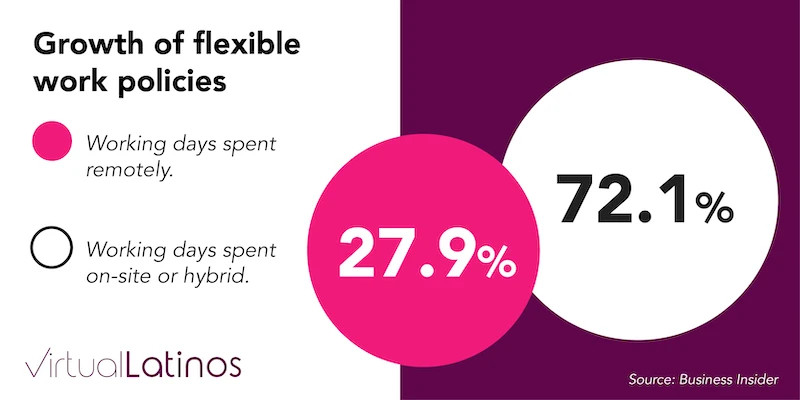
While remote work surged during the COVID-19 pandemic, its long-term adoption is now a structural transformation. In 2019, only 30% of employees engaged in any form of remote work.
By 2023, that number rose to 48%, and projections estimate that 32.6 million Americans, around 22% of the workforce, will work remotely by 2026 (Upwork Future Workforce Report, 2023).
Globally, hybrid models continue to be institutionalized by companies like Microsoft, Google, and Deloitte. Gallup research confirms that most people whose jobs can be done remotely now prefer a hybrid schedule that blends home and office time.
At the same time, 2026 has brought a significant counter-trend. According to Robert Half’s latest analysis, many companies have implemented return-to-office plans, reducing the number of remote and hybrid job postings.
However, this shift creates a strategic advantage for employers who maintain flexible arrangements, as they stand out in a tighter talent market. For virtual professionals, this means companies that actively hire remotely are more intentional, more committed, and often more willing to invest in the right person.
Remote work and employee well-being
Employee satisfaction correlates strongly with work flexibility. A study by Tracking Happiness in 2024 found that remote workers report up to 20% higher happiness scores than their in-office counterparts.
Autonomy, reduced commute stress, and personalized workspaces contribute to higher life satisfaction and happiness.
Remote work puts more money in your pocket
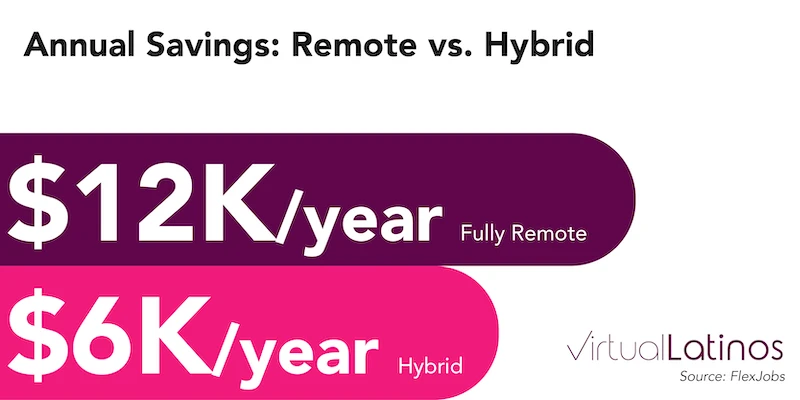
And here’s the part that really matters: remote work can save you serious money. According to FlexJobs, professionals working fully remote can save up to 12,000 USD annually, while hybrid workers save around 6,000 USD, mostly on commuting, meals, child care, and office attire.
It’s not just employees who benefit. Research shows that companies can also save thousands of dollars per remote employee each year by reducing costs on office space, utilities, furniture, and supplies. This means hiring remote professionals is a win for both sides, and it gives you a powerful talking point when showcasing your value to U.S. businesses.
For many professionals in Latin America, that’‘s real money, enough to support your family better, invest in your future, or finally build that financial cushion you’ve been working toward.“
Time gained is life gained
Research from the U.S. Census Bureau shows the average American commuter loses 54 minutes a day just getting to and from work. For many professionals in Latin America (navigating congested cities and long transit routes), that number can be even higher.
Going remote gives you back hundreds of hours every year.
Productivity is holding or improving
Contrary to earlier skepticism, research from Stanford University confirms that remote workers are 13% more productive, take fewer breaks, and report higher job satisfaction, especially in roles requiring focused, independent work.
Bottom line: flexibility isn’t just a perk anymore; it’s your competitive advantage. Understanding these trends helps you make smarter career moves and position yourself for the opportunities you deserve.
How Has Remote Work Changed the Hiring Landscape?
Remote work has fundamentally reshaped how companies hire talent, and that opens real doors for you. Companies are no longer limited by location when searching for talent, which means your skills can compete on a global stage.
What once meant relocating your entire life or expensive travel now happens with a laptop and good internet. This changes everything for professionals ready to work globally.
Hiring has gone truly global
Thanks to the normalization of remote work, businesses are no longer restricted by geography. A company in New York can easily hire a developer in Buenos Aires or a designer in Bogotá. This shift has opened doors that were previously closed, giving talented professionals in Latin America direct access to opportunities with U.S. companies, without needing to relocate or compromise on pay.
LinkedIn’s Global Talent Trends Report (2023) states that remote job listings receive twice as many applications as on-site roles, even though they now represent a smaller portion of total listings.
This is largely because skilled professionals are prioritizing flexibility, autonomy, and work-life balance over location.
Employers value retention and flexibility
Gallup survey reveals that 59% of remote workers are more likely to stay with their current employer if given flexibility in where and how they work. Even more telling, Gallup finds that six in 10 exclusively remote employees say they would be extremely likely to look for a new job if that flexibility were taken away.
Robert Half’s latest research adds that even offering a day or two of remote work can make a company far more attractive to top candidates, and that a large portion of professionals actively job-seeking in 2026 are specifically motivated by finding more remote flexibility.
When companies offer flexibility, they keep their best people longer, which means more stability, growth opportunities, and recognition for you as a valued team member, not just a temporary hire.
Diversity and inclusion accelerate
Remote hiring naturally increases workforce diversity, allowing companies to recruit from underrepresented regions and socio-economic backgrounds.
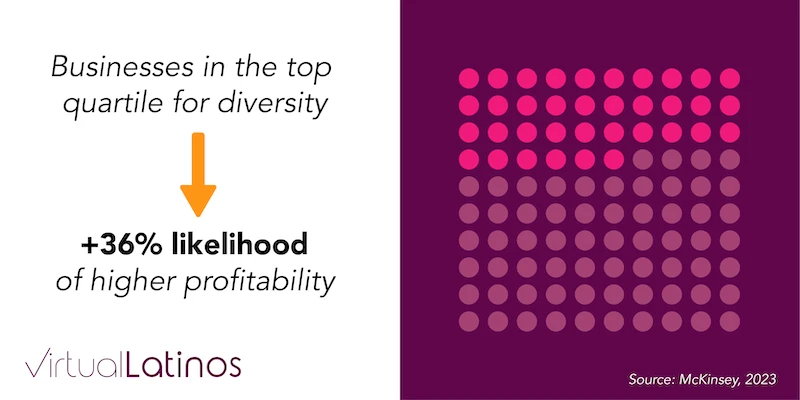
McKinsey’s 2023 research found that businesses in the top quartile for diversity were 36% more likely to outperform their peers in profitability.
The result: remote work has created a more accessible, opportunity-rich hiring landscape than ever before.
From expanding access to global opportunities to improving employee retention and accelerating diversity, the remote hiring landscape is more dynamic and inclusive than ever.
For professionals in Latin America, this is your moment: equal access to global opportunities, competitive USD salaries, and career growth, all without leaving home.
Why Are Professionals Choosing Remote Work Over Office Life?
More professionals are choosing remote work every year, and it’s not just about convenience. It’s about building a career that actually fits your life, protects your well-being, and gives you room to grow.
Flexibility is now a top priority
The dominant reason professionals choose remote work is flexibility. This signals a cultural shift: flexibility is now seen as a non-negotiable feature of modern employment, especially among younger generations. Studies show that when you gain this freedom, your work-life balance improves dramatically, making remote and hybrid roles even more appealing.
Here’s what’s changed: flexibility isn’t a nice-to-have anymore, it’s essential. And if you’re reading this, you’re already part of a workforce that’s choosing flexibility on its own terms.
Health, mental wellness, and work-life balance
The American Psychological Association found that commuting is a leading cause of daily stress, and eliminating it can reduce cortisol levels and improve overall mood.
The health benefits go well beyond stress reduction. Research shows that the vast majority of remote professionals report positive impacts on both their mental and physical health. Remote workers consistently cite less burnout, healthier food choices, better sleep, and more time for movement throughout the day. And here’s the thing: when your life is better, your work is better too.“
Career control and autonomy
A 2023 report by Owl Labs found that over 34% of employees would accept a 5–10% pay cut in exchange for permanent remote flexibility.
What does this tell us? That professionals today want careers that fit their lives, whether that means being there for family, having time to travel, or pursuing creative projects that matter to them.
Here’s another benefit: remote work helps you avoid burnout. When you control your schedule, you have the energy to keep learning, take on new challenges, and build a career that lasts, without running yourself into the ground.
Remote work expands career horizons
Remote roles eliminate geographical barriers, giving professionals access to a global job market. Especially for workers in developing regions or rural areas, remote work provides a level playing field for competing globally on skills rather than location.
The World Economic Forum states that remote work has unlocked economic opportunities for women, caregivers, and people with disabilities by removing physical and logistical constraints that previously excluded them from traditional workspaces.
Remote work is about freedom, not just distance
The top reasons professionals are choosing remote work over office life include not only a desire for flexibility but also a conscious prioritization of health, autonomy, and access to global opportunities.
As more companies embrace this shift, employees are increasingly empowered to design careers that fit their lives, not the other way around.
Does Working Remotely Really Improve Productivity?
Yes, remote work really does improve productivity, especially when you have the right tools, clear communication with your team, and a workspace that works for you.
- Studies like the one from Stanford University show a 13% productivity boost, with fewer distractions and more focused work time.
- Hybrid models (two to three days at home) are often the most effective, balancing deep work and team collaboration.
- If you’re early in your career, remote work might feel challenging at first without in-person mentorship. That’s why finding companies that offer strong onboarding, regular check-ins, and clear communication is key to your success.
- Productivity must be redefined to include sustainability, creativity, and well-being, not just task completion.
The takeaway: with the right tools, a supportive team, and a workspace that works for you, remote work can genuinely help you do your best work.
What Are the Financial Benefits of Working Remotely?
Working remotely isn’t just about comfort; it’s about money that stays in your pocket. Real money that can change your financial situation.
Direct cost savings
- No daily commute = lower transportation costs.
- Reduced spending on meals, coffee, and work clothes.
- Fewer transportation costs overall—whether that means less fuel, fewer rideshares, or lower vehicle wear and tear.
Indirect benefits
- Lower stress leads to fewer sick days.
- Increased energy for side gigs or professional development.
Over a year, these savings can add up to thousands of dollars, money you can use to support your family, invest in your professional growth, build real financial security, or finally achieve goals that felt out of reach.
Which Industries Are Leading in Remote Hiring?
Remote opportunities exist across almost every industry, but these sectors are hiring the most virtual professionals in 2026:
- Technology & IT – Software development, UX/UI design, cybersecurity.
- Customer service – Particularly bilingual and multilingual roles.
- Marketing & creative – Content writing, graphic design, SEO, and social media management.
- Real estate – Virtual assistants handling listings, client communications, and admin work.
- Healthcare administration – Medical billing, appointment scheduling, telehealth support.
Upwork reports that companies are prioritizing results-based roles, ideal for skilled professionals in Latin America seeking to showcase their output.
How Can You Position Yourself for a Remote Role?
Ready to land a remote role? It comes down to clearly and confidently showing who you are and what you can do. Here’s how to make your profile impossible to ignore:
- Highlight remote experience: Even if it was during the pandemic.
- Showcase communication skills: Mention tools you’ve used (Slack, Zoom, Asana).
- Be clear about your preferences: Note in your resume or cover letter that you’re seeking remote or hybrid opportunities.
- Stay flexible: Many employers may start you in hybrid before moving to full-time remote.
- Understand the current landscape: as some companies shift back to in-office models, the employers still hiring remotely are doing so with intention, making them stronger matches for committed virtual professionals.
When you communicate your skills, experience, and flexibility clearly, you show employers exactly what they’re looking for: a confident, reliable professional ready to deliver results remotely. In a market where remote roles carry a competitive edge for the companies that offer them, positioning yourself as a skilled, self-directed remote professional is one of the smartest moves you can make.
Key Takeaways
- Remote Work: 32.6 million Americans were projected to work remotely by 2026, while hybrid work remains widespread in remote-capable roles.
- Financial Impact: Fully remote professionals can save up to $12,000 annually on commuting and other work-related expenses.
- Productivity: Remote workers can be 13% more productive than in-office employees.
- Talent Demand: Remote job listings attract twice as many applications as on-site positions.
- Retention: 59% of remote workers are more likely to stay with employers that provide location flexibility.
Remote Work FAQ
What skills do you need to become a virtual assistant?
You’ll need strong communication, time management, tech skills, and problem-solving abilities. But here’s the good news: many successful VAs start with these basics and then specialize in areas like social media, bookkeeping, or real estate support, building expertise that makes them invaluable.
Can you work as a virtual assistant without a degree?
Absolutely. Your skills, training, and real-world experience matter more than a degree. Thousands of successful VAs have built thriving careers by taking online courses, earning certifications, and proving what they can do. You can too.
Where can you find remote virtual assistant jobs?
Platforms like Upwork, Remote.co, and Virtual Latinos connect Latin American professionals with U.S. businesses looking for skilled virtual assistants.
Is remote work declining in 2026?
It depends on how you look at it. Return-to-office mandates have picked up, with Robert Half reporting that fully in-office roles rose from 65% in Q4 2025 to 87% in Q2 2026. But that does not mean remote work is disappearing. Gallup data shows that among workers in remote-capable roles, 52% are still hybrid and 26% are fully remote. Demand for skilled remote professionals, especially in tech, marketing, and administrative support, remains strong. The model is shifting, not shrinking.
What percentage of jobs are fully remote?
According to Gallup, about 26% of workers in remote-capable roles in the U.S. are fully remote, while 52% work in a hybrid arrangement and 22% are fully on-site. Keep in mind these figures apply specifically to jobs that can be done remotely. Many roles in fields like manufacturing or hospitality are not remote-capable at all, which means the overall share of fully remote jobs across all industries is lower.
From Remote Work Statistics to Real Career Growth
The numbers don’t lie: flexibility, autonomy, and global opportunities aren’t just dreams anymore; they’re real possibilities for skilled professionals ready to go after them.
At Virtual Latinos Academy, you can turn these trends into a competitive advantage, building the skills, confidence, and network you need to land high-value remote roles.
And through Virtual Latinos, you’ll connect directly with U.S. companies seeking top Latin American talent.
You’ve seen the statistics. You know the opportunities are real. Now it’s time to make your move. Apply today and start shaping a remote career that gives you the freedom and growth you deserve.